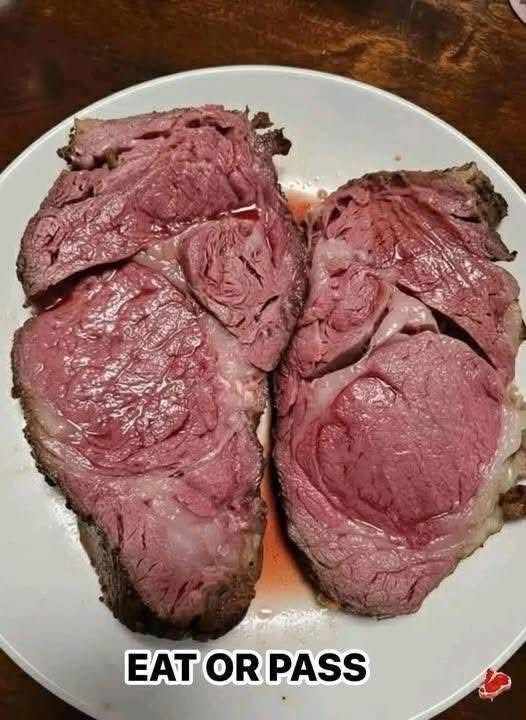
Of course! Achieving the Perfect Prime Rib Roast is a culinary milestone, and it’s easier than you think. The secret lies in a reverse-sear method, which guarantees an evenly cooked, juicy interior and a spectacularly crispy, herbaceous crust.
This method is foolproof and will give you restaurant-quality results.
The Perfect Prime Rib Roast (Reverse-Sear Method)
This technique involves slow-roasting the meat at a low temperature first, then blasting it with high heat at the end to create the crust. It eliminates the dreaded “gray band” of overcooked meat.
Prep Time: 15 minutes (plus several hours or overnight for salting)
Cook Time: Varies by weight (see chart below)
Resting Time: 30-45 minutes (CRUCIAL)
Servings: About 2 people per rib (a 3-rib roast serves 6-8)
Ingredients
· 1 standing rib roast (prime rib), 3 to 7 ribs (approx. 6-16 lbs)
· (Ask your butcher for a “standing rib roast,” and have them remove the bones and tie them back on. This makes carving infinitely easier.)
· For the Dry Brine: 1 tablespoon kosher salt per 2 lbs of meat
· For the Herb Paste:
· 3-4 tablespoons softened unsalted butter or olive oil
· 4-6 cloves garlic, minced
· 2 tablespoons fresh rosemary, finely chopped
· 2 tablespoons fresh thyme leaves, finely chopped
· 1 tablespoon freshly cracked black pepper
Equipment
· A reliable meat thermometer (an instant-read or probe thermometer is essential)
· A large roasting pan with a rack
Step-by-Step Instructions
Step 1: Dry Brine (1-3 Days Before, Highly Recommended)
- Pat the entire roast dry with paper towels.
- Rub the kosher salt evenly over every surface of the roast, including the bone side.
- Place the roast on a wire rack set over a baking sheet, uncovered, in the refrigerator. This process seasons the meat deeply and helps dry the surface for a better crust.
Step 2: Bring to Room Temperature & Prepare Herb Crust
- 2-3 hours before cooking, remove the roast from the refrigerator. Let it sit on the counter to take the chill off. This is key for even cooking.
- Preheat your oven to 225°F (107°C).
- In a small bowl, mix the softened butter, minced garlic, rosemary, thyme, and black pepper to form a paste.
- Rub this herb paste all over the surface of the roast.
Step 3: The Low & Slow Roast
- Place the roast bone-side down (fat-side up) on the rack in your roasting pan.
- Insert a probe thermometer (if you have one) into the very center of the roast, making sure it’s not touching bone or fat.
- Roast at 225°F (107°C) until the internal temperature is about 10-15°F (5-8°C) below your desired final temperature. This is the “reverse-sear.”
· Cooking times are a guide, but the thermometer is law. A 10-lb roast will take approximately 4-5 hours.
Temperature Guide (for the low-temp phase):
· For Rare: Remove at 105-110°F (41-43°C)
· For Medium-Rare: Remove at 115-120°F (46-49°C)
· For Medium: Remove at 125-130°F (52-54°C)
Step 4: The Rest & The Blast
- Once the roast hits your target low-temp, remove it from the oven.
- Tent it loosely with foil and let it rest on the counter for 30-45 minutes. (Don’t worry, it won’t get cold). This allows the juices to redistribute.
- Meanwhile, preheat your oven to its highest setting (500°F / 260°C).
- After the rest, remove the foil and place the roast back into the extremely hot oven.
- Roast for 8-12 minutes, just until the exterior is beautifully browned, sizzling, and crispy. Watch it closely to avoid burning the herb crust.
Step 5: Final Rest & Carve
- Remove the roast from the oven. The internal temperature will have risen to its final perfect state during the sear and carryover cooking.
· Final Temperatures after Searing:
· Rare: 120-125°F (49-52°C)
· Medium-Rare: 130-135°F (54-57°C) *This is the ideal temperature for prime rib.
· Medium: 140-145°F (60-63°C) - Let it rest for another 10-15 minutes before carving.
- To carve, snip the strings, remove the bones (they should come off easily), and slice the meat against the grain into thick, beautiful slabs.
Why This Method is Perfect: Pro Tips
· Thermometer is Non-Negotiable: Oven temperatures vary. The only way to guarantee perfection is to use a meat thermometer.
· Don’t Skip the Dry Brine: This is the single biggest flavor upgrade you can make.
· The Rest is Crucial: Rushing the resting period will cause the precious juices to run all over the cutting board, leaving you with drier meat.
· Au Jus: While the roast rests, place the roasting pan with its drippings over a burner on medium heat. Add a cup of red wine or beef broth, scrape up the browned bits, and simmer for a few minutes. Strain and serve as a simple, delicious au jus.
You now have the blueprint for the most succulent, flavorful, and impressive Prime Rib Roast of your life. Enjoy your masterpiece